

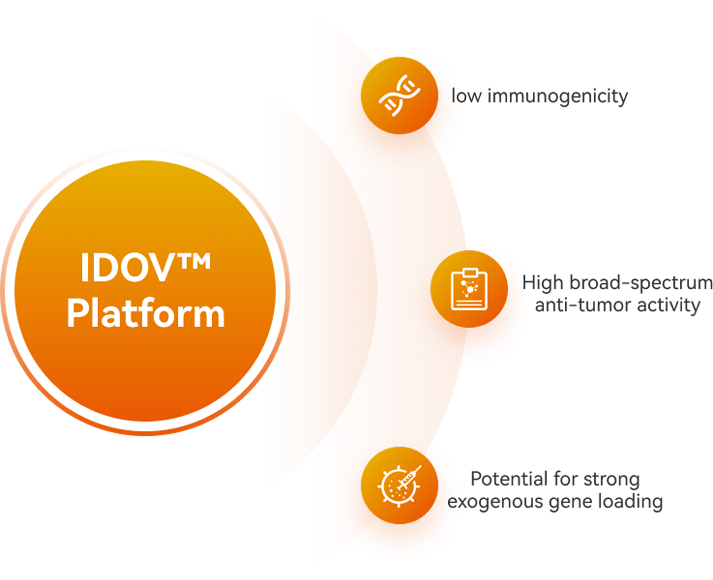
The IDOV™ (Intravenously Deliverable Oncolytic Virus) platform is a vaccinia virus-based technology platform designed for systemic intravenous administration. Its core breakthrough is a proprietary high-yield EEV (Enveloped Extracellular Virus) strain that helps the virus evade immune clearance and target tumor lesions across the body. With an ultra-large genomic capacity, the platform allows insertion of multiple therapeutic gene modules to boost tumor cytotoxicity, activate anti-tumor immunity or suppress tumor angiogenesis, and can be combined with other therapies for optimal anti-tumor effects. This revolutionary platform holds great promise for reshaping the treatment of solid tumors and pioneering a new era in the therapy of advanced metastatic solid tumors.
Core Mechanism: A proprietary "magic switch" gene module, regulated by a small-molecule compound, selectively inhibits viral replication in normal cells (>99.7% inhibition rate) while allowing unimpeded amplification in tumor cells when activated. Key Advantages: The design significantly elevates the therapeutic safety margin, holds potential for treating the large immunocompromised patient population with cancer, and delivers 10–100-fold enhanced specific cytotoxicity against MSS-type colorectal cancer cells. Clinical Validation: In a Chinese investigator-initiated trial (IIT), combination therapy with an anti-PD-1 antibody and fruquintinib achieved breakthrough data in MSS-type colorectal cancer patients who failed standard therapies: ~90% disease control rate (DCR), ~10-fold higherobjective response rate (ORR) and ~3-fold longer progression-free survival (PFS) versus last-line standard care. Monotherapy also showed clinical benefits in multiple cancer types, including lung, breast, gastric and cardiac orifice cancer.
Core Mechanism: By expressing potent immune factors, it activates and remodels the tumor microenvironment, converts "cold tumors" into "hot tumors", and promotes extensive infiltration of CD8+ T cells.
Key Advantages: It enhances systemic anti-tumor immune responses from the source. Preclinical data demonstrate that its efficacy is significantly superior to that of the basic platform virus and other immune activation strategies.
Clinical Validation: Has received FDA IND approval in the U.S., with dosing commenced in the Phase I clinical trial in Australia. In preclinical studies, a single intravenous injection achieved a "one-shot cure" of solid tumors in immunocompetent mice.

Address
Room 2101, Xingtong Building, No. 88 Baoxing Road, Haiwang Community, Xin'an Sub-district, Bao'an District, Shenzhen City.
Postal Code:518101

Tel
0755-23000529

Email
info@longyaobio.com